Dear The Sims Team,
Dear The Sims Team,
My name is Elizaveta, and I am a 20-year-old clinical psychology student from Russia, studying at Kazan Innovative University. I am writing on behalf of my student team, The Simptom, to share a little story about how your game has inspired us — and to ask for your feedback on a project that means a lot to us.
For many of us, The Sims is so much more than a video game. It is a part of our childhood, our family memories, and even the way we connect with people across generations. Millennials and Gen Z have grown up with this game, creating families, building dream homes, telling stories, and making memories that stay with us long after we turn off our computers.
For me, it all started with The Sims 3.
When I was little, I used to bother my dad because I desperately wanted to play computer games with him while he was trying to sleep after working night shifts. Eventually, he introduced me to my older brother’s computer, where a whole family dynasty was already growing in The Sims 3. I started creating my own families, raising generations of Sims, inventing stories, and watching their lives unfold. Sometimes, those stories ended in unexpected ways — including encounters with the Grim Reaper that I definitely wasn’t emotionally prepared for!
My older brother, my cousins, and I all played The Sims. I still remember visiting someone who had The Sims 3: Supernatural installed and gathering around the computer to watch vampires, supernatural creatures, and zombies appear after dark. Those moments felt magical. We would laugh, invent stories, and get completely absorbed in our little virtual worlds.
Over the years, I have explored different games in the franchise, including The Sims Medieval and The Sims with its many expansions. Even now, at 20, I still love the freedom the games give us: the ability to create a world of our own, build a dream home, tell our own stories, and return to a place where anything feels possible.
And now, something wonderful has happened. The game that was part of my childhood has become part of our academic journey.
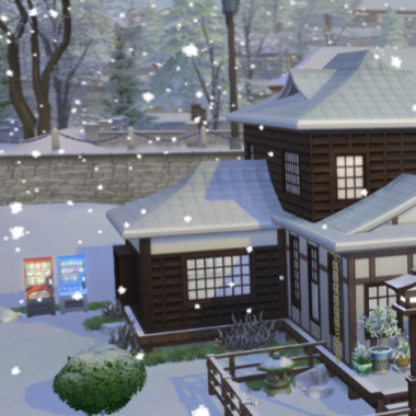
We are preparing to participate in the Psychology and Medicine Olympiad in Ryazan, Russia. Our team consists of students studying psychology, and we wanted to create something memorable for our team presentation. That’s when I suggested an idea inspired by The Sims: what if we presented ourselves as a family of Sims?
Our concept combines the familiar visual language of The Sims with our future profession. Sims have needs, emotions, relationships, individual personalities, and different ways of responding to the world around them. As clinical psychology students, we are learning to understand human behavior, psychological needs, emotions, and the reasons behind people’s actions.
The connection felt so natural that we decided to call our team The Simptom — a playful combination of “Sim” and “symptom,” connecting the world of The Sims with the field of psychology and medicine.
We have even learned a few Simlish phrases to bring our concept to life! And perhaps the most heartwarming part is that some of our teammates had barely played The Sims before this project. We encouraged them to give it a try, and now they have become fans themselves. A childhood favorite of mine has brought a whole new group of people together.
Our idea is not about claiming your work as our own. Quite the opposite: we want to acknowledge the inspiration, celebrate the game that brought us together, and show how something created for entertainment can inspire students to approach their profession with creativity, curiosity, and a sense of humor.
We are reaching out because we would genuinely love to know what you think.
Would your team be interested in seeing our photo-based team presentation? We would be happy to share the photographs, the visual concept, and an English translation of our presentation text. We would also love to hear your feedback on how we bring The Sims into our academic project.
Most importantly, we would like to ask whether our proposed use of The Sims-inspired visual elements, references, and presentation concept is acceptable under your guidelines, or whether we need specific permission for any of the materials. We want to respect your intellectual property and make sure we approach this responsibly.
We are students from Russia, representing Kazan Innovative University, and this project is part of our participation in the Psychology and Medicine Olympiad in Ryazan. It is an educational, student-led project, and we are reaching out to you to ask for guidance before sharing it publicly.
Thank you for creating a game that has brought joy to so many people across generations. Thank you for the childhood memories, the unexpected stories, the virtual families, the chaotic nights with supernatural Sims, and the countless hours spent building worlds that felt like our own.
For me, it is especially meaningful that something I loved as a child can now inspire me in the profession I am choosing as an adult.
We would be incredibly happy if you had a chance to see what your game has inspired us to create. And if you would like to follow our journey through the Olympiad, we would be delighted to share how it goes.
With love and appreciation,
Elizaveta and Team The Simptom
Kazan Innovative University
Russia