Forum Discussion


13 years ago
Ok....now we are ready for something really complicated. :D Why? Because you already know the basics of roofing:
1) cover the area to be roofed in decking to make it easier to see your work space.
2) make sure we dont have any windows, doors or furniture in the house that will collide with our roofing efforts.
3) Start by determining the main section of the roof: the biggest section that can be covered as a whole.
4) Work your way around the house and deal with each leftover section as it comes.
5) Try to match up seams whenever possible by lining them up with the corners of the house.
6) Look at the whole occasionally to make sure everything flows together and gives a pleasing and balanced appearance.
7) Use different shapes to give our roofing some variety and interest.
All of these things apply to just about every kind of house you might try to roof. Especially Victorians. Victorian houses can be a little scary because they have a lot of sections and many different things going on. It can seem a little overwhelming...but all you have to do is take it slow and work your way around the house.
Lets take a house like this as an example:
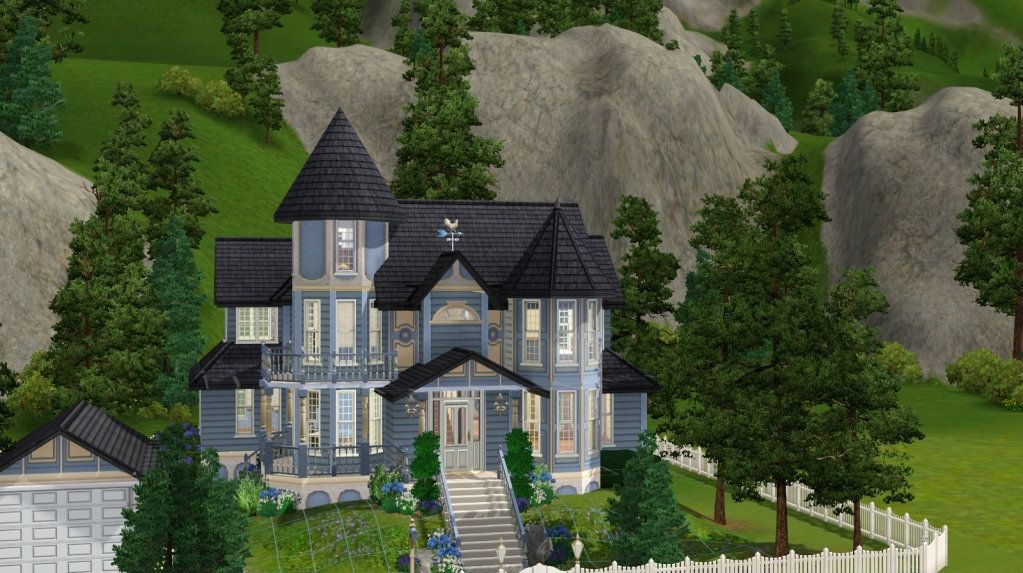
This roof is something you can absolutely handle! :D First, lets put down our decking:
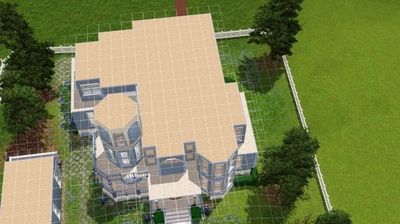
You might notice in this example we have a roof type we have not covered before....the round or conical roofing that are on turrets.
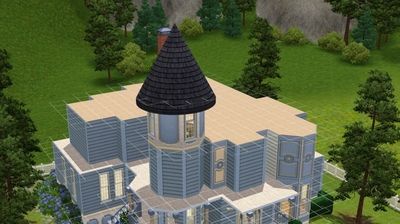
A few things that might drive you nuts about using this kind of roof: getting the roof to center on what you are trying to cover. Sometimes you might find it always wants to be over a little like this:
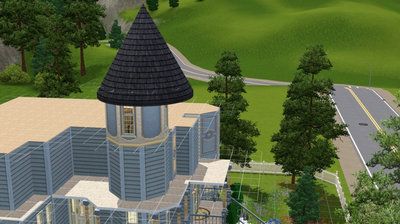
It looks right until you see it from another angle and it seems like no matter what you do it wont line up. There is an easy solution to that! Always draw by placing the roof tool on one corner ....and draw to the opposite corner like this:
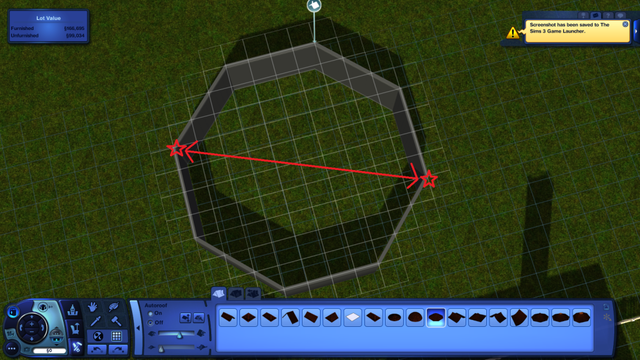
Start and stop drawing on the corners and not beyond and the roof will be centered.
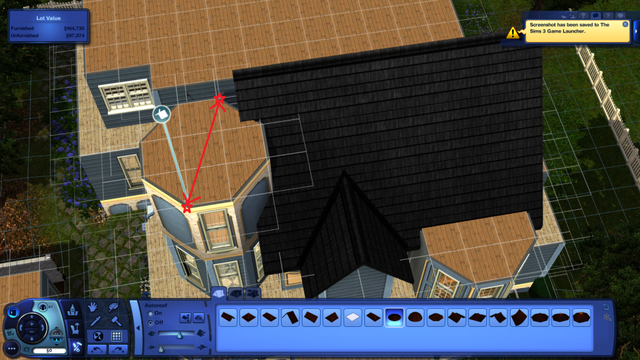
Another thing you might notices is that when you draw a conical roof it looks weird and smushed like this:
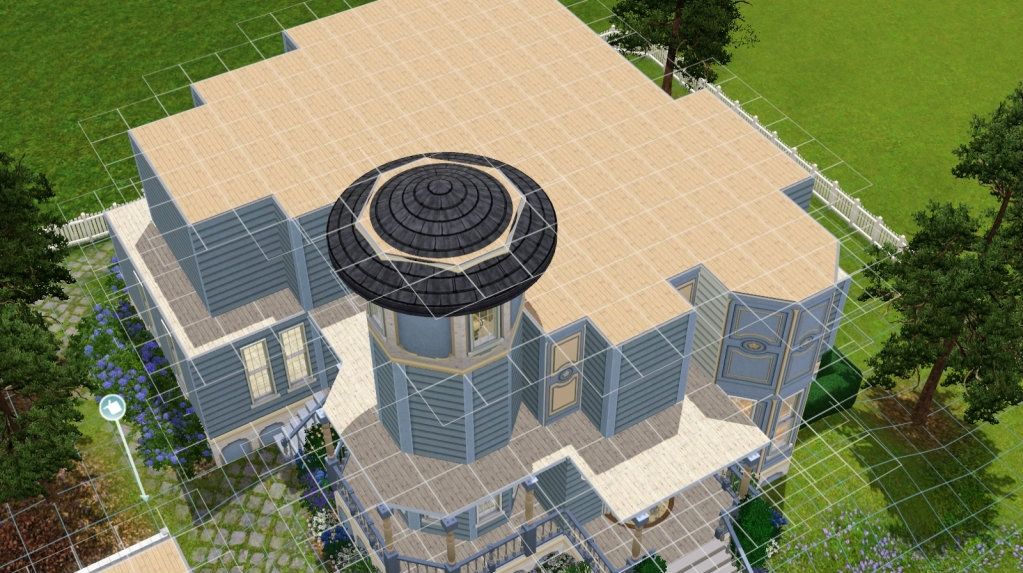
That just means you need to use the individual roof angle tool:
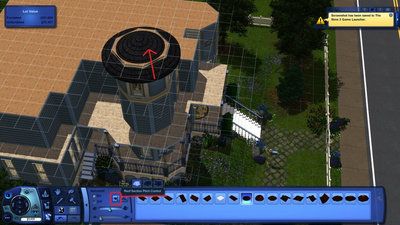
and raise it up until it looks right.
One final note about the conical roof. Just like with other roofs, the size of the cone is directly proportional to the area it is covering. So a big turret will mean a very big cone:
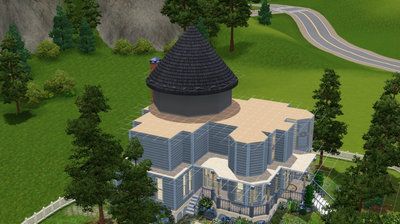
And a smaller turret will make a smaller cone:
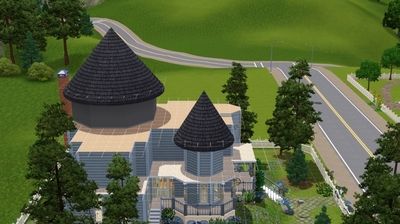
This is important to keep in mind when you are constructing your house. Large turrets mgiht give you more room on the inside, but the cone it takes to cover them can really be out of proportion to the rest of your house and throw the whole look off. My best advice is to try to keep whatever you are covering with a conical shaped roof to be as small as possible...that will give you the best options for the appearance of your house. It might mean that the turret room can only be a bathroom instead of a bedroom, but you can always place a bedroom somewhere else in the house, right? :-)
1) cover the area to be roofed in decking to make it easier to see your work space.
2) make sure we dont have any windows, doors or furniture in the house that will collide with our roofing efforts.
3) Start by determining the main section of the roof: the biggest section that can be covered as a whole.
4) Work your way around the house and deal with each leftover section as it comes.
5) Try to match up seams whenever possible by lining them up with the corners of the house.
6) Look at the whole occasionally to make sure everything flows together and gives a pleasing and balanced appearance.
7) Use different shapes to give our roofing some variety and interest.
All of these things apply to just about every kind of house you might try to roof. Especially Victorians. Victorian houses can be a little scary because they have a lot of sections and many different things going on. It can seem a little overwhelming...but all you have to do is take it slow and work your way around the house.
Lets take a house like this as an example:
This roof is something you can absolutely handle! :D First, lets put down our decking:
You might notice in this example we have a roof type we have not covered before....the round or conical roofing that are on turrets.
A few things that might drive you nuts about using this kind of roof: getting the roof to center on what you are trying to cover. Sometimes you might find it always wants to be over a little like this:
It looks right until you see it from another angle and it seems like no matter what you do it wont line up. There is an easy solution to that! Always draw by placing the roof tool on one corner ....and draw to the opposite corner like this:
Start and stop drawing on the corners and not beyond and the roof will be centered.
Another thing you might notices is that when you draw a conical roof it looks weird and smushed like this:
That just means you need to use the individual roof angle tool:
and raise it up until it looks right.
One final note about the conical roof. Just like with other roofs, the size of the cone is directly proportional to the area it is covering. So a big turret will mean a very big cone:
And a smaller turret will make a smaller cone:
This is important to keep in mind when you are constructing your house. Large turrets mgiht give you more room on the inside, but the cone it takes to cover them can really be out of proportion to the rest of your house and throw the whole look off. My best advice is to try to keep whatever you are covering with a conical shaped roof to be as small as possible...that will give you the best options for the appearance of your house. It might mean that the turret room can only be a bathroom instead of a bedroom, but you can always place a bedroom somewhere else in the house, right? :-)
Featured Places