champs/rivals glitches
right why have i been dealing with this for the past 2 weeks thinking it was my own connection when ive now got it clipped from a champs game that shouldve been a win due to them leaving the match because i was 5-1 up and theyve left and its counted as a loss for me because theres a failure to connect me to ultimate team servers. i feel like this game has it against me everytime i play champs and sometimes on rivals but not so much. if you want the clip EA support i can provide you with it but you need to adjust my wins on champs ive had 4 games out of the 7 ive played be like this 3 games ive lost fair and square but when your taking wins off me because of your servers being absolutly **bleep** im gonna complain. 1 win 6 losses is my record so far and have it clipped he left so i i should be at 2 wins but for the rest of the games theyve left i should technically be at 4 wins and 3 losses13Views0likes0Comments
FIFA 26 Not Opening After Recent Update - Javelin
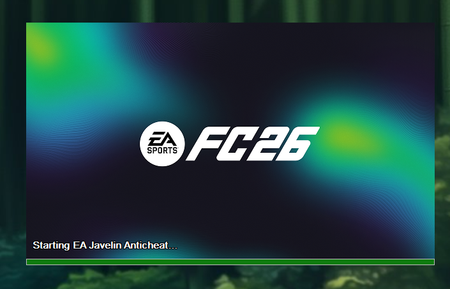
Hello EA Support, I am having issues with FIFA 26 after the recent update. The game is no longer opening properly. I already tried uninstalling the game and reinstalling it again, but the issue still continues. Whenever I try to launch the game, it does not open. The last screen I see says “Starting EA Javelin Anticheat...” and after that the game never starts. My screen also freezes after this, which never happened before the update. I have attached a screenshot of the issue for your reference. Could you please help me fix this issue? Thank youSolved388Views0likes9Comments
Architectural Vulnerabilities and Asymmetric State Manipulation
The current operational landscape of competitive digital environments is exhibiting severe anomalies that suggest a fundamental compromise of underlying client-server architectures. Observational data and continuous runtime telemetry indicate the persistent presence of targeted, dynamic parameter injection. Commonly referred to within threat intelligence communities as a "player impediment hack," this vector is not a trivial instance of suboptimal network routing or packet loss. Rather, it is a highly sophisticated, event-driven exploit that manipulates core physics parameters and rendering pipelines in real-time, completely undermining the deterministic integrity of the platform. Dynamic Attribute Degradation and Event-Driven Payload Execution The core engineering failure lies in the unauthorized, asymmetric manipulation of entity attributes during live runtime. Specifically, vital locomotive variables—such as base sprint speed, acceleration coefficients, and kinetic collision strength—are being dynamically throttled by unverified third-party logic. Unlike standard network degradation, which typically manifests as uniform rubber-banding or global state desynchronization, this exploit selectively targets specific client-side entities while artificially buffering others. Furthermore, the execution of this vulnerability appears fundamentally event-driven. Forensic observation points to highly specific trigger conditions—for instance, when distinct graphical assets, such as the Roberto Rivellino player model, execute a successful state change like scoring. This trigger initiates a cascading parameter adjustment across the computational environment. The logic hook artificially enhances the performance variables of the exploiting client while systematically applying negative modifiers to the targeted roster. This deterministic behavior strongly implies malicious interventions operating either via direct client-side memory injection or through compromised server-side packet validation protocols, allowing bad actors to overwrite the simulation's state matrix. UI/UX Desynchronization and Rendering Artifacts The most technically glaring evidence of external payload injection is the corresponding degradation of the User Interface (UI) and User Experience (UX) presentation layers. During periods of unauthorized state manipulation, local clients report distinct and reproducible rendering artifacts: the horizontal shifting of pre-match UI elements (often offset to the left), the spontaneous relocation of ping connection indicators, and anomalous variations in dynamic player rating displays. In a structurally sound software architecture, the core gameplay execution loop and the UI rendering pipeline operate in isolated memory spaces. When UI alignment physically shifts alongside altered latency indicators, it strongly suggests that incoming network packets are malformed, carrying injected padding or unverified data structures. The client’s UI parser miscalculates the geometric offsets of the graphical overlay because the fundamental byte-structure of the packet has been cryptographically tampered with. This UI desynchronization is a classical symptom of a Man-in-the-Middle (MitM) attack or a localized memory hook, where the structural payload of the game state is repackaged by unauthorized software before reaching the local rendering engine. Differentiating Adversarial Intervention from Network Topology Faults It is computationally necessary to distinguish these targeted exploits from standard network jitter. During a standard high-latency or low-ping scenario, the client experiences delayed input registration across all input vectors uniformly. The physics engine attempts to interpolate missing data, causing universally recognized lag. However, the reported anomalies manifest mid-simulation, are tightly coupled to specific in-game events, and selectively throttle distinct entities. This confirms that the root cause is not an overloaded server cluster. Instead, it is an active adversarial intervention overriding the game’s local mechanics variables. The engine is receiving falsified, asymmetrical state updates that the server architecture is catastrophically failing to reject. Systemic Integrity, Forensics, and Escalation Protocols The persistent nature of these vulnerabilities represents a critical failure in current anti-cheat telemetry and runtime integrity verification. Because the exploit directly manipulates competitive balance for digital gain, it transitions from a mere software bug to a significant cybersecurity incident involving unauthorized access, digital manipulation, and structural compromise. Escalating this systemic failure to formal law enforcement and cyber forensics divisions is a structurally sound and necessary protocol. Filing a First Information Report (FIR) with regional cyber authorities—such as the UP Police and specialized cyber cells—establishes a rigorous legal framework to investigate these breaches. Malicious actors utilizing duplicate accounts to artificially control outcomes are committing actionable cyber offenses. Law enforcement intervention demands that platform developers preserve immutable server-side state logs, network handshake records, and historical telemetry data for comprehensive forensic analysis. Engineering Remediation Imperatives Immediate, high-signal engineering remediation is required at the infrastructure level. The development pipeline must deploy strict server-side validation for all physical parameter updates, ensuring that local client memory manipulations cannot dictate global game states. Furthermore, zero-trust cryptographic verification of UI payload structures must be implemented to prevent the packet tampering that causes the observed rendering misalignments. Ensuring a secure, tamper-proof runtime environment is a baseline engineering imperative. Continued failure to address these dynamic attribute manipulations will necessitate broader public scrutiny. Utilizing high-visibility broadcast channels across platforms like X, YouTube, and Twitch to stream these active vulnerabilities directly exposes the architectural flaws to higher engineering management and the broader developer network. The empirical data is unambiguous: the ecosystem's structural integrity is compromised, and it requires an immediate, foundational security overhaul. Attaching the initial F.I.R. report that has been submitted to the Uttar Pradesh Police in India. I will be taking this further since I am streaming on YouTube, X, and Twitch too. There may be these manipulators, duplicates, and their handlers which might be involved in making sure this happens regularly.7Views0likes0Comments
Hello everyone, does buying FC 26 for Switch 2 come with FC 26 for Switch 1?
I saw someone else post that they bought FC 26 in the Switch 2 Japanese eShop and got FC 26 for Switch 1 as a bonus. However, when I bought FC 26 in the Japanese Nintendo eShop, I didn't receive FC 26 for Switch 1. Does anyone know what's going on? Sorry to trouble you all, and thank you.102Views0likes4CommentsNot enough space to install FC 26 on PS5
Hi, I just purchased FC 26 Standard from the Playstation Store but in attempting to download to install the PS5 indicates that I do not have sufficient storage. The game indicates it requires 66GB and I have 350GB available. I've even attempted to install the PS4 of the game at 80GB but it's complaining of the same. Any ideas or help greatly appreciated. Some further details in my setup: I have PS5 Digital (non-disc) version I don't have any SSDs or other devices connected to the PS5 I've attempted to rebuild the PS5 database and clear its cache in safe mode I also have FC 25 Ultimate installed Accounts are connected/linked in PS and EA.13Views0likes0CommentsThe game is disgusting at the moment.
I've been playing the game for 25 years and only been playing ultimate team for 15 years spent thousands on packs and yet ea don't help you they don't give you players that should been in objectives the pack wait is disgusting and the servers are a absolute joke cannot access game without a issue for nearly 3 months can't open anything on game in store as will freeze then takes five minutes too open 1 pack unstable connection permently got 900mb not a slow internet doesn't work spoke too company nothing has changed just constant grieve from a game that will happily take your money but can't even let the menus work. Is the any fix tried all online suggestions and nothing.28Views2likes0Comments